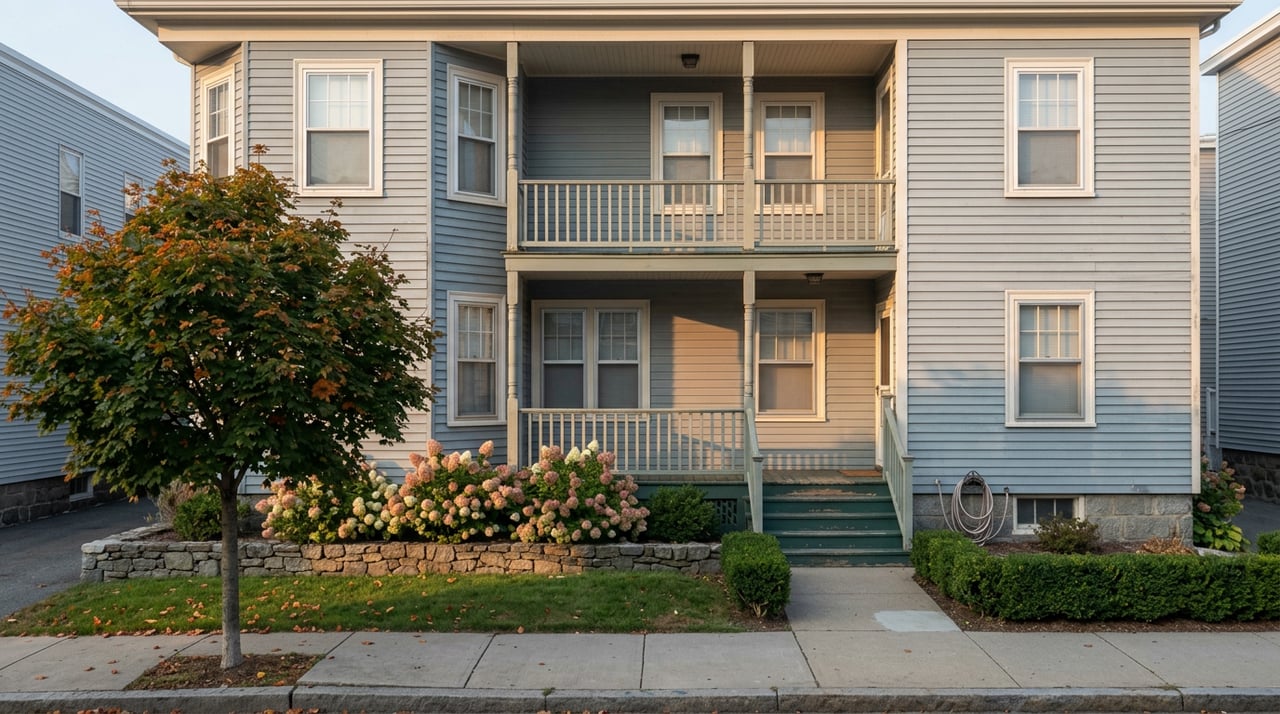
The inspector climbs onto the back porch first. That is where triple-decker trouble tends to live, so you start there. He checks the ledger board, taps the railings, notes the boiler's age, runs water at every fixture, and flags the usual suspects for a building built somewhere between the 1880s and 1930s: knob-and-tube in one bedroom, a soft spot near a downspout, a panel that could use an upgrade. Nothing surprising. Nothing that kills the deal.
Then he leaves, the report comes back clean enough to close on, and the question that actually determines what this building is going to cost you never gets asked, because it isn't on his checklist. It's on a state database, and it has almost nothing to do with the porch.
The Building Can Pass. The Paperwork Might Not.
Almost every triple-decker in Dorchester predates 1978, which is the year the federal government banned lead-based residential paint. Massachusetts law treats any home built before that year as presumed to contain lead unless someone proves otherwise. That presumption doesn't go away because a seller renovated the kitchen or repainted the trim. New paint over old lead is still old lead.
What that means in practice: the inspection you paid for tells you about joists and wiring. It tells you nothing about whether this building has ever been tested for lead, whether hazards were found, or whether anyone has ever obtained the compliance paperwork that determines what you're allowed to do with the other two units once you own them.
What Changed in May 2026
This part of the law just moved, and it moved for the first time in twenty years. Following an April 21, 2026 meeting of the state's Governor's Advisory Committee for the Lead Poisoning Prevention Program, Massachusetts rolled out a new Tenant Lead Law Notification and a required Tenant Certification Form that landlords and new renters must both sign at lease signing. Landlords who claim they have no knowledge of lead in a unit now have to attest, in writing, that they actually checked the state's Lead Safe Homes database first. Checking the box used to be a formality. Now it comes with a paper trail.
If you're buying a Dorchester two- or three-family with any intention of renting a unit, this form is the one you'll be signing the day you hand someone keys, not the day you close on the building.
Two Databases, One Search You Should Run Before You Waive Anything
Massachusetts keeps two public tools for exactly this situation. Lead Safe Homes 1.0 tells you whether a property has ever been inspected for lead and whether an inspector found hazards. Lead Safe Homes 2.0 goes further and stores the actual inspection reports and Letters of Compliance, so instead of a yes-or-no you can sometimes see the underlying paperwork. Both are searchable by street through the state's Find Your Home's Lead History tool.
Before you write an offer on a Dorchester triple-decker, this search takes about five minutes and tells you things a home inspection can't:
- Whether the building has ever passed a lead inspection at all
- Whether it holds a Letter of Full Compliance or only a Letter of Interim Control, which expires
- Whether the seller's "no known lead hazards" box on the disclosure form matches what the state's own records show
The Ten-Day Clock You're Allowed to Waive
Federal law also gives buyers of any pre-1978 home a ten-day window to have a lead-based paint inspection done before you're bound to close, separate from your standard home inspection. You can shorten it, lengthen it, or waive it entirely in writing. A lot of buyers waive it in a competitive market without realizing what they're waiving, because it sounds like paperwork rather than a real inspection period. On a Dorchester triple-decker where two of the three units are about to become rental income, it's the one inspection window that actually determines your future liability, not just your future repair bill.
Why This Bites Harder on a Rental Than on a House You'll Live In Alone
If you buy a single-family home for yourself, lead paint is a health question you get to manage on your own timeline. Buy a triple-decker and plan to rent the other two units, and it becomes a legal one on someone else's timeline.
Massachusetts landlords are strictly liable for lead poisoning in a rental unit, meaning you can be held responsible even without proof of how the exposure happened, and you cannot refuse to rent to a family because they have young children. If a tenant with a child under six moves into a unit with an unresolved lead hazard, you are required to delead it, on your dime, regardless of what your purchase and sale agreement said about the building's condition.
Insurance follows the same logic. Massachusetts insurers generally attach a lead poisoning exclusion to dwelling liability coverage on pre-1978 rental units, meaning the policy you think protects you as a new landlord may specifically carve out the largest liability the building carries. A narrow exception sometimes applies for owners who recently took title and are actively working toward compliance, but that window is measured in days, not years. Read the details of how that exclusion works before you assume a standard landlord policy has you covered.
None of this shows up in a cap rate calculation. A 6% return looks the same on paper whether the building has a Letter of Full Compliance or has never been tested.
What the 2026 Numbers Actually Say About Where to Look
Dorchester isn't one market this year, it's two moving at different speeds. Through early June 2026, single-family sales averaged $829,000, down from $942,000 over the same period a year earlier, and moved with only about 2.1 months of supply, a tight, seller-favored pace. Condos told a different story: average sale price rose to $640,000 from $624,000, but with roughly 3.9 months of supply and nearly double the time to accepted offer. Buyers competing for single-family stock are fighting over less inventory than buyers looking at condos, even though the condo segment is the one where prices actually climbed.
Multi-family sits in its own lane again. Investment guides tracking Greater Boston in early 2026 put Class C triple-decker cap rates at roughly 5.5% to 6.5% or better in Dorchester, alongside Mattapan and Roxbury, with the strongest activity clustered around Adams Village, Savin Hill, and the corridors near the Ashmont and Shawmut Red Line stops. Those numbers come with a caveat the guides are upfront about: the higher yield assumes active management and real due diligence on building condition, not just a rent roll that looks good on a listing sheet.
Supply isn't loosening on its own either. In a Zoning Board of Appeal case earlier this year, a proposed three-decker near Talbot Avenue needed multiple variances just to get approved, for lot size, setbacks, and parking, even in a neighborhood built almost entirely out of that housing type. Adding density in Dorchester still runs through a case-by-case approval process, which is part of why existing triple-decker stock keeps its value.
The Financing Layer Most Buyers Assume Works Like a House
FHA financing allows down payments as low as 3.5% on 1-4 unit properties, as long as you plan to occupy one unit as your primary residence. That's the loan program that makes owner-occupied triple-deckers accessible to buyers who couldn't otherwise afford Dorchester's single-family prices. It's worth saying plainly: qualifying for that loan doesn't touch the lead compliance question at all. You can close with 3.5% down on a building that has never been lead-tested, and the day you rent the other two units, every disclosure and liability rule above applies to you exactly the same as it would to a cash investor.
Before You Sign Anything, Do This
- Search Lead Safe Homes 1.0 and 2.0 by street before you write an offer, not after
- Ask the seller directly for any existing Letter of Full Compliance or Letter of Interim Control, and get the expiration date if it's the latter
- Don't waive the 10-day federal lead inspection period without at least reading what the database search already told you
- Budget for a full lead inspection and possible deleading as a real line item, not a contingency you hope you won't need
- If you're financing with FHA, confirm with your lender how the property's lead status could affect the appraisal, since FHA has its own property standards on this
A Few Questions Worth Asking
Does a renovated kitchen or new paint mean the lead risk is gone? No. A visual update doesn't remove lead paint underneath it, and the law's presumption for pre-1978 buildings doesn't reset because of cosmetic work.
If I don't plan to rent to families with children, do I still need to worry about this? Yes. You can't screen tenants based on whether they have kids, and a tenant without children today can have one tomorrow. The compliance obligation follows the building, not the current tenant.
What if the seller checked "no knowledge of lead" on the disclosure? That box means no evidence has surfaced yet, not that the building is lead-free. Run the Lead Safe Homes search yourself before treating it as confirmation.
A triple-decker in Dorchester can be a genuinely good investment. The building's bones, the rental income, the location near the Red Line, none of that is the issue. The issue is buying one the same way you'd buy a single-family Cape, when the paperwork that actually governs your liability lives in a different place than the inspection report you're used to reading. If you're weighing a two- or three-family purchase in Dorchester or anywhere else on the South Shore, I'd rather walk you through this before you write an offer than after you've closed. Reach out to Angela Bergin and let's talk through what a specific property actually requires.